Plan a European Holiday in 5 Easy Steps

........with steps within steps, of course!!

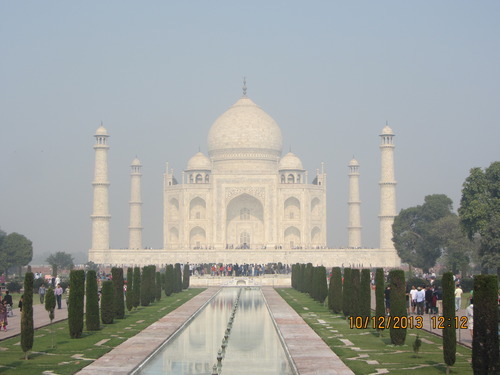
A Trip to The Taj Mahal

.......a truly timeless memorial to love!

Thursday, October 15, 2015

Madurai - The City of Temples (Part 1)

During the winter holidays, we went home to Chennai. Generally, we tend to remain at home, only visiting relatives and a little shopping. So this time, we decided to go on at least one out of town trip. So we decided on Madurai, Rameshwaram and Kanyakumari. Plan was to go to Madurai, followed by Rameshawaram and Kanyakumari. However, we had to return from Madurai as there was a cyclone warning and we were informed that all tourist activities would be curtailed. Incidentally, the cyclone warning lasted for exactly two days, that is the days of our visit. It was bright and sunny the day we reached back Chennai.

Madurai is the second largest city in Tamilnadu. In many ways, Madurai is to Chennai what Mumbai is to Delhi. It is considered the cultural centre of Tamilnadu. It is also an important industrial and educational hub.


The recorded history of Madurai goes back to the 3rd century BC and is one of the oldest continuously inhabited cities in the world. The city was mentioned by Megasthenes, the greek ambassador to India and as well as the famous Kautilya. The city is closely associated with the Tamil language and the Tamil Sangams (assemblies of famous scholars and poets) which were held here.

The city has been ruled at various times by the Pandyas, Cholas, Madurai Sultanate, Vijayanagar Empire, Madurai Nayaks, Carnatic Kingdom and finally of course, the British in 1801.

We arrived at Madurai by train early in the morning and took a room in the TTDC hotel. it was good value for money, with neat and clean rooms.  We quickly freshened up and headed for our first stop, the Madurai Meenakshi Temple.

On recommendation of a Madurai resident, we went to the Murugan Idly Shop for breakfast. The shop which started in Madurai, now has branches in Chennai and SINGAPORE???? and opening soon in DUBAI??!! We ordered his signature dish, the idly....and it was worth it. White, light and fluffy. Not a great looking place, but neat and clean. You will have to eat on fresh banana leaves, thambi style. And he does not serve coffee in the morning, so you will have to have coffee elsewhere. But it is very conveniently located - just 200 mtrs from the temple entrance. So you can come here and have breakfast before walking to the temple.


Madurai Meenakshi Temple

The most important landmark of the city is the Madurai Meenakshi Temple. The entire city is planned, as a series of quadrangles, around this temple. Meenakshi, to whom this temple is dedicated, is another name of Parvati, Shiva's consort (Info for the occassional non-indian reader). Shiva, in this temple, is known by the name Sundareshwarar. Unlike other Siva temples in South India, the principal deity is Meenakshi, and not Sundareshwarar.


The Story of Meenakshi


(Source : Wikipedia)


Meenakshi, which means fish-eyed, by one retelling, was born to Kanchanamalai, the wife of the second Pandyan king. The girl was born (or appeared out of the holy fire of a yagna, depending on the source) had three breasts. A voice from heaven announced that the third breast would dissappear when she meets her future husband. She was named Tadaatagai and was trained as the heir to the throne. On attaining age, she waged war in three worlds and conquered Brahma abode (Sathyaloka), Vishnu's abode (Vaikuntha) and Devas abode (Amaravati). She then attacked Shiva's abode (Kailasha), where she easily defeated Shiva's army (Bhootaganas) headed by Nandi. She then headed to attack Shiva. But the moment she looked at him, she couldnt fight and bowed her head down in shyness. Her third breast also vanished. She immediately realised that Shiva was her destined husband and she was an incarnation of Parvati. Both returned to Madurai and the king arranged the coronation of his daughter followed by her marriage with Shiva.

The marriage was the biggest event on earth with all gathering in Madurai. Vishnu, the brother of Meenakshi, was to preside over the marriage. However, he was tricked by Indra and was delayed. (More on this soon) After marriage, they ruled over Madurai before assuming their divine forms as Meenakshi and Sundareshwarar.


 (Source : Wikipedia)

(Source : Wikipedia)

As an enactment of this tradition, every evening, before the temple closes, the image of Sundareshwarar is carried by a procession led by priests and musicians to Meenakshi's bedroom to consummate the union. He is taken back at dawn.

In many ways, the beauty of Hindu mythology is the sheer diversity of it. Each story can be found, with small and large variations, in different sources. Each city, locality, community would have a variation of the story, passed down over generations by word of mouth, which speaks to them. Every temple and shrine would have a story which in some way would be connected to the main thread. For example, the delay in Vishnu's arrival for the marriage is a story by itself and gives divine authority, so to say, for the existence of two more large temples in Madurai.


Temple Architecture

The temple is believed to have been originally built by Indra for Shiva. Tamil literature as well as saints have mentioned this temple over the last two millenia. The temple is believed to have been sacked by the muslim invader, Malik Kafur in 1310 and all the ancient elements were destroyed. The temple was then rebuilt in parts between the 13th and 18th centuries. The major building work was undertaken by the Nayak Kings, with substantial expansion by Thirumalai Nayak between 1623 and 1655.

The Meenakshi temple in many ways represents the apex of south indian style of temple architecture.

(Source : Wikipedia)

As can be seen above, the entire complex, which is spread over 45 acres has various Gopurams, shrines, mandapams and a tank.

Gopurams are the huge towers, covered with colorful images, that act as gateways. The complex has a total of 12, of various heights and age. There are four on the cardinal points acting as entrances to the complex. The tallest, the Southern tower, rises to over 170 feet and was built in 1559.


These gopurams are covered with colorful images, drawn from epics like mahabharata and ramayana, puranas, myths, legends, folklore, etc. These images are not carved out of stone and is not an integral part of the structure. It is made of lime and mortar, and is repaired and repainted every 20 years or so.


The temple has three shrines, for Meenakshi, Sundareshwarar and Shiva in the form of Natarajar. Each of the shrines have their own gopurams guarding them and providing entry. The Meenakshi idol is made of emerald-hued black stone. The Sundareshwarar shrine lies at the centre of the complex indicating that the ritual importance of Meenakshi developed later.


(Source : Wikipedia)


Mandapams are covered halls, supported by pillars. There are various halls, including the thousand pillared hall (with 985 pillars), celestial wedding hall, Hall of eight goddess, dark hall, musical pillar hall, etc. One tends to lose track as each is filled with stories woven into the stone architecture.


Another interesting side story. The Jains were a major community in Madurai by the 7th century. As per legend, the local Pandyan king converted to Jainism to the dismay of his wife and ministers. So they called the Shaivaite saint, Sambandar, to try an reconvert the king to Shaivism. The Jains tried to kill the saint by burning down his house unsuccesfully. The Jains and the Shaivaite saint held various challenges such a the scriptures being thrown into the fire to see which survives, thrown in water to see which floats, etc. And finally under his influence, the king converted back to Shaivism. Then starts the interesting bit. The king told the Jains to convert too. When they refused, he had 8000 of them impaled, in sitting posture, on wooden stakes. This event is mentioned, celebrated and commemorated in narratives by various writers and poets. It is also depicted in frescoes around the Temple pond and in the museum hall. A few of them are shown below. As you can see, the victims, all bald and bearded are impaled and are being tortured by men while birds are pecking at them.

Now for the strange part - There is no mention of this incident in Jain chronicles. The first mention in Shaivite literature is nearly 500 years after the events supposedly occurred. The frescoes were painted in the seventeenth century, nearly a 1000 years later. It is believed by historians that no such event occurred and the legend was created by Shaivites to prove their superiority. That is like announcing to the world that you have committed murder, without having done anything. Concocting up an imaginary story of having tortured and killed 8000 men, and celebrating and feeling proud of it. What does it tell us about humanity?  


And finally the final piece is the holy tank, a must in every hindu temple. The tank is called the Golden Lotus pond as it was in this pond that the golden lotus required by Indra for his pooja bloomed. According to legend, it was a mandatory requirement for any work of tamil literature to be brought to the pond and put in it. If it sank, it was no good. If it floats, it is good literature. I wonder if the poets spent more time selecting the type of material on which to write, rather than on the work itself. Lord Shiva, it seems, granted a boon to a stork, that there would be no fish or any other form of marine life, in this sacred pond. And so it is till today. (Personally I fail to understand why the stork did not want any fish in the pond......what will he eat? Anyways, I am sure it is an interesting story with a temple somewhere dedicated to it)


That just about sums up the temple.

Is it worth a visit. Without a doubt. It is crowded, but manageable. It is slightly dirty, but very clean considering the crowd passing through it. A guide is a must. Without him explaining things, it is impossible to truly see and appreciate the entire complex (that is from a purely tourist point of view).

That ends Part 1 of this travelogue. In the next part, I will try and describe the other places of interest in Madurai including the Thirumalai Nayakkar Palace........and other temples.

Continue reading in Part 2............


Wednesday, October 14, 2015

Golden Tickets, Magic Passes and Hidden Entrances


City Passes and Entry Tickets

Entry tickets to various places of interest, can add up to a substantial amount. Most major tourist cities have a pass giving you free or discounted access to many of the sights. However, they are generally expensive. So you need to decide on the sights and museums you want visit, check their individual ticket prices and compare it to the price of the pass. Passes are generally cost effective when you are visiting more sights in less time. A pass may or may not be worth its price depending on your sightseeing plan. However, many passes provide other advantages such as free use of local transport, a separate and much shorter line to get in, discounts, etc.

A few examples -

Roma Pass - The highlights of the pass are :-
  • Free entry to the first two museums you visit. Concessionary entry thereafter.
  • Free use of city's public transport network.
  • Valid for three days.
  • Cost 36 Euros.
Is it worth buying? You need to decide what places you will visit among the discounts offered. In our case, here is the calculation.

  • Colosseum - 12 Euros.
  • Castel D'Angelo - 10 Euros
  • Assuming a bare minimum of three journeys every day, you will make 9 trips on the public transport network over three days - 13.5 Euros
  • Total - 35.5 Euros
All other discounts and travel were just added savings. In addition, Roma pass holders have a separate line in most sights, saving you a lot of time. Thus the Roma Pass, for us, was a great deal. 

Firenze Card - This card, on the other hand, costs 72 Euros for three days. It provides one free entry in all participating museums, free transport and free Wifi. However, it is worth it only if you intend visiting a lot of museums. It wasn't worth it for us.

Cinque Terre Card - Usage of Trekking Trails + Trains for 1 day was 12 Euros. It was worth it for us.

Venezia Unica - You can create your own customised card from the various options. Whether it is value for money depend upon your plans. But remember that the tickets for the water taxi (Vaporetto) are expensive - 7.50 Euros per trip. Since we were spending only one day in Venice, we bought a pass which allowed us unlimited Vaporetto use over 24 hrs for just 20 Euros.

Vienna Card or Vienna Pass - In Vienna, you have a choice between the Card and the Pass. The Card costs just 18.90 Euros giving you free use of public transport for 2 days, but only discounts in the museums and sights. The Vienna Pass on the other hand costs a hefty 69 Euros, again allowing free use of public transport for 2 days, but free entrance to most major museums and sights. Roughly speaking, the Pass is a better option if you intend to visit as many sights as you can, in 2 or 3 days. A leisurely tour of the city may be better served by the Vienna Card. However, you need to do your own calculations, based on the places you plan to visit, to get the best deal. For us, the Pass was worth the cost.

Swiss Pass - In Switzerland, your travel options include buses, trams, trains, boats, funiculars, cable cars, gondolas, cogwheel trains, etc. And they can be prohibitively expensive. So, in order to confuse you further, they also have a slew of passes to select from. You have the Eurail Pass which gives you discounts on some transport options. You have the Swiss Travel Pass which allows you free use of most forms of transport across Switzerland and free entry to various museums and sights. You have the regional passes, the most popular among these being the Bernese Oberland Pass, which permits free use of all forms of transport within a region, except some private operators. And then you have the Swiss Half-Card which only gives you discounts, but is valid for a much longer period. So, all in all, it is a confusing landscape. In my opinion, for a short trip, the Swiss Travel pass is the best value for money among all the options. Damn expensive though.

Paris Pass - The Paris Pass is actually a Paris Visite Card and Museum Pass combined, with some extras thrown in. So, you need to decide whether you will use enough extras to make the expense worth it. In our case, we didn't think so and went ahead with the transport pass and Museum pass separately. The Paris Visite Card permitted us free use of all forms of public transport within Zones 1-3. This included all places we wanted to go except Versailles, Disneyland and the Airport which are in Zone 5. The pass for Zone 1-5 is much more expensive, and it is more economical to buy the single journey tickets for these places, rather than a pass. The Paris Museum Pass is excellent value for money, permitting you free access to most museums in Paris, including Versailles. You only have to decide the duration of the pass to buy depending on your plans.


Online Entry Tickets

And finally, you have the option of buying tickets of many attractions online. For a nominal extra charge, you can save hours of time as you don't have to stand in line for the tickets. We found this especially useful in Florence and Venice, where we did not buy passes. Here are a few places we bought tickets online.

Vatican - The official website of the Vatican for buying everything from museum tickets to tours to meeting the Pope. We took an official tour of the Vatican Museums, St Peters and Sistine Chapel. It is extremely cheap compared to private tour operators and is very well conducted. However, bookings start 60 days in advance and the best times get booked early.


Florence - We bought our tickets for the Uffizi and Accademia here. It is the official website for all Museums in Florence. You pay 4 Euros extra as a service charge. But it is worth it, just to avoid the serpentine lines outside these museums.

Venice - The Visitmuve site is the official website of the Venetian Museums. You can buy tickets online, including combination tickets, such as one for all museums in St Marks Square. I also bought Skip-the-Line tickets for the St Marks Basilica from the Venetoinside website. It was like taking an appointment, and certainly saved me a lot of time.

A Warning - While buying tickets online, be sure to check the official website. There are many commercial websites, which sell the same tickets at a much higher price. Be careful.


Shortcuts and Hidden Entrances

It is very useful to do a search for the best time and place of entry for various popular sights. It can save you a lot of time and more importantly, give you the satisfaction of having outwitted the hordes of tourists :-). Again, the best way of finding these gems is by googling for phrases like "best time to enter....", "how to avoid lines outside......", etc. Here are a few tips we picked up during our trip.
  • Rome - The ticket for the Colosseum includes entry to the Roman Forum and the Palatine Hill and is valid for a single entry to each place over two days. So instead of standing in a long line outside the Colosseum, buy your combination ticket at the entrance to the Palatine Hill, which is never crowded. You can thereafter see the Colossuem and Roman forum at your leisure, skipping the long ticket lines completely. Of course, this tip is not required if you have a Roma Pass, as you have a separate line in all these places. Other sources - Rick StevesItalyloguegoItaly
  • Versailles - Buy your tickets online if you are not taking a Paris Museum Pass. Try to arrive at the Palace by 9 AM when it opens. However, do not enter the Palace. take the bus and proceed to the Triannon Complex, which is a few kilometres away, and work your way back through the Triannon, Marie Antoinnettes Estate and the Gardens, to arrive at the Palace in the afternoon, as late as possible. Most visitors walk the other way round, starting with the palace and ending at the Triannon. This strategy should help you avoid the crowd. Other sources -  Conde Naste Traveler
  • Louvre - The Louvre, with the Mona Lisa, is one of the biggest draws of Paris. The lines outside the Glass Pyramid, which is the main entrance to the museum, are serpentine. So what should you do? Take any of the other lesser known entrances, at the Passage Richelieu or the Porte des Lions. These entrances also lead you to the ticket counters under the Glass Pyramid. The Porte Des Lions is especially useful if you have a Museum Pass as you can reach under the pyramid and enter the museum in minutes. A second tip - try to visit the Louvre on a wednesday or a friday, when it is open till 9:45 PM. You can reach the museum by 3, after lunch and a siesta, and still have a solid 6 hours to wander around the museum. By 5, the tourist bus crowd would have left, leaving you to wonder why your friends couldn't take a selfie with the Mona Lisa. Other sources - The Telegraph, cntraveler, Tom's Guide.
  • Eiffel Tower receives over 32,000 visitors every day during summer. So there is no way you can avoid a line. You can only make it shorter. Option 1, buy tickets online, from the official website. You are given a time slot when you have to be present to board the elevator. However, the slots are limited and sell out like hot cakes. And, of course, you also pay a premium. Option 2, is to head for south west pillar, which is for those who want to go up by stairs. The lines are much shorter, and move faster, here. Don't worry, you do not have to climb to the top; you can go up to the second level, taking 674 steps, and take the elevator to the top from there. Apart from the thrill of walking up the tower, you would have completed your tour of the first and second levels, while those waiting for the elevator would still be standing in line below. You save a little money, as an added bonus. The climb is quite enjoyable. We, in spite of climbing at a leisurely pace, with selfie pitstops, did it in about 15 min. Other sources - The Telegraph, a blog, another blog

Finally, Europe is filled with tourists. There will be a queue at every place of interest. So, if you want to avoid the crowds, you have to either go to unconventional places, or at unconventional times. However, if you visit when the weather and time is perfect, be prepared to bump into a lot of people who think likewise.

One advice I can offer is to leave early everyday. The lovely squares of European cities have a totally different look when empty. Be there at the entrance of the cathedrals and museums by 9 AM, and you will have a much shorter wait. Delay by an hour, and a serpentine queue will await you. Most tourist buses, with the hordes, arrive around 10 AM. If you enter before they arrive, it will be a much more memorable visit.

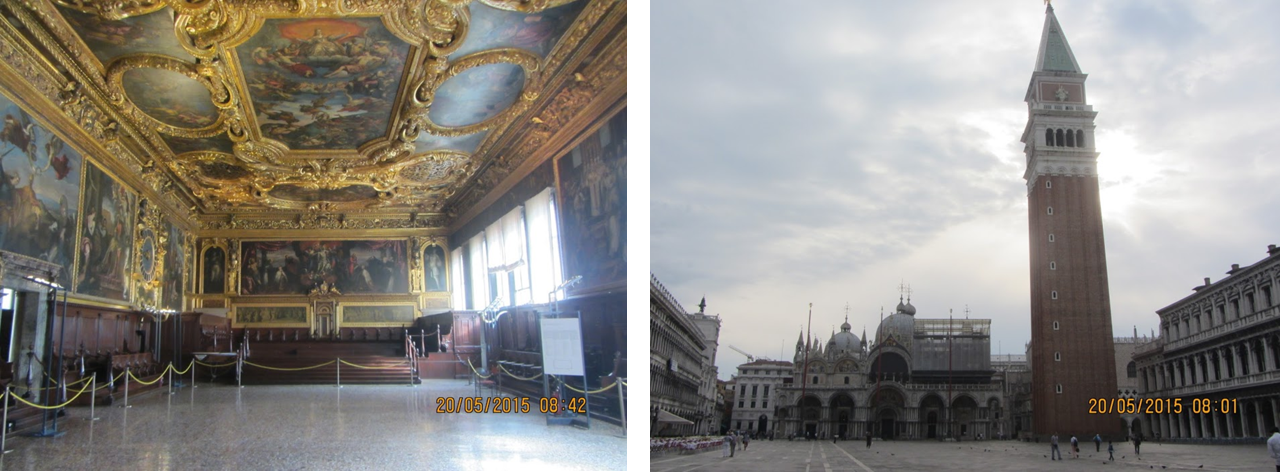
Here is what you see if you arrive early......


And an hour later..........


Conclusion

Entry tickets to various museums and sights will be one of your major expenses. Any miscalculation in these expenses can really cause you a lot of heartburn and put your budget in trouble. It is worth your while to spend some effort to consider various options, decide whether to buy certain passes or to go online and buy tickets, as this can save you a lot of money and more importantly, time. It can be a frustrating experience to plan a day full of museums visits and fun activities, and then spend half the day, waiting in queue, outside the first museum.

With this post, we come to the end of the series on planning of the trip. Hope to begin the next series on our actual travels and experiences soon.


**********************************************************************************
Other posts in this series......

Eurotrip 2015 - Our Grand Tour

Eurotrip 2015 Episode 1- Genesis
 
Plan a European Holiday in 5 Easy Steps

How to Fly to Europe on a Budget

Hassle-free Bookings to Stay Within Budget

Planes, Trains and Automobiles - How to Travel Across Europe on the Cheap

Low Cost Airlines in Europe : A Budget Travelers Guide

Places to Visit - A Guide to Creating your Own Local Itinerary

How to Move Around Town Like a Local

Visa - The Key to the Beckoning Gates

Wednesday, October 7, 2015

Visa - The Key to the Beckoning Gates


Obtaining a Tourist Visa for Europe is a reasonably simple process. Since they want more tourists to come to their countries, the procedures are not designed to discourage and hinder you.


Schengen Visa

When travelling to Western Europe, you will, in all likelihood, need the Schengen Visa, which covers 26 countries. In addition, some non-member countries like Croatia permit entry, as long as you have a valid Schengen visa. However, the United Kingdom is not a part of the Schengen treaty and you will need a UK visa for entry.

We did not plan to travel to the UK and hence needed a Schengen visa only. If you need any info on the UK Visa, please visit the website here.

Which Country?.   The decision about which country to apply for the visa will depend on the following conditions :-

"A Schengen visa has to be obtained from the Embassy/Consulate of the country where the main purpose of travel lies. Therefore, please check your travel plans before making your application. In case of travel to multiple Schengen countries, please make your application to the Consulate where you will be staying for the maximum number of days, and from the Point of First Entry into the Schengen Countries, if the duration of stay is the same in more than one Schengen Country."

In short - Country with maximum stay or Point of first entry. In our case, that was Italy.

When Can I Apply?   You should apply for a Visa at least 15 working days prior to the date of departure and not more than 90 days before departure. You can apply at a shorter notice, but will have to give an application stating that you will not hold the embassy responsible if you do not get the visa in time.

VFS-Global.   Most western countries, including the US, UK and Schengen countries have outsourced the paperwork to a private partner, VFS-Global. One you have decided which country you want the visa for, go here and choose the country from the drop down list on the bottom left corner. This should take you to the page for that specific country.

Here onwards, the process would generally be similar, but with minor differences depending on the country. I will be covering my experience with Italy.


Visa Process for Italy

Once you have chosen the consulate based on your location, you will be redirected here, with a clear step by step process.

First Step - Check if you need a Visa. If you are from india, Yes.

Second Step - Choose your Visa Type. If your trip is less than 90 days, and purpose is tourism, Schengen Type 'C'.

Third Step - Prepare your application. Download the application form from here. Fill up one copy for each applicant, including children.Ensure you have all the relevant documents according to the requirements given here. The main requirements are :-


  • Passport - Ensure that your passport has 3 months of validity beyond the visa dates, and it has at least two blank pages.
  • Photos - As per specifications given here. They are very strict about this. In case your photos don't match their requirements, you have to take an overpriced photo inside the application center.
  • Travel insurance - Here is a list of approved travel insurance schemes.
  • Your itinerary with travel dates. Below is the itinerary I submitted.
  • Return air tickets.
  • Cover letter giving purpose of trip or employers leave authorization.
  • Proof of adequate financial means including salary slips, bank statements, or income tax challans/Form 16.
  • Proof of accomodation which may either be hotel bookings or invitation letter from sponsor in Italy. Tip - If you are not sure about your stay, you can book on bookings.com, selecting hotels giving the 'Free Cancellation - Pay Later' option. You can use he printouts of these confirmations for your visa, and subsequently cancel or change you bookings. There is no process of checking where you actually stay. I am assuming that this step is only to ensure that you know how to book a place and take care of yourself. Here is a sample booking printout I enclosed.

  • For minors, the application has to be signed by both parents. Else, an affidavit has to be provided.


Fourth Step - Schedule an appointment here. A slot is generally available within a day or two. You cannot choose the date, so keep the next few days free when scheduling the appointment.You can reschedule the appointment, but only twice, after which you have to pay the visa charges again.

Fifth Step - Visit the Visa Application Center (VAC). Carry your passport and all the above-mentioned documents to the VAC. The center for some of the countries, including Italy, has recently moved to the Shivaji Stadium Metro Station near Connaught Place from its earlier location at Nehru Place. The VAC visit is for collection of biometric data, checking and submission of application with supporting documents and payment of fees. The visa fee is Rs.4330 for adults, Rs.2530 for minors between 6 and 12 yrs and a VFS service charge of Rs.1010. If everything is in order, your passport and papers would be submitted and an acknowledgement receipt will be issued. 

Sixth Step - Post submission process. This is the step when you wait and track your application as the embassy decides if you are welcome to their country. During your VAC visit, you will be asked if you want to receive application status updates by SMS, for a charge of course. In my experience, neither did I receive any updates, nor is it required. You can always track the status here.

Seventh Step - Collection of Passports. Once the passport with visa is ready, you can either collect it yourself from the VAC counter by showing the acknowledgment receipt or by courier if you opted for this service during submission of application.

With that ends the process of getting your visa. 
Congratulation! You now hold the keys to enter the gates, which have been beckoning you with the promise of wonderful times ahead.


**********************************************************************************
Other posts in this series......

Eurotrip 2015 - Our Grand Tour

Eurotrip 2015 Episode 1- Genesis

Plan a European Holiday in 5 Easy Steps

How to Fly to Europe on a Budget

Hassle-free Bookings to Stay Within Budget

Planes, Trains and Automobiles - How to Travel Across Europe on the Cheap

Low Cost Airlines in Europe : A Budget Travelers Guide

Places to Visit - A Guide to Creating your Own Local Itinerary

How to Move Around Town Like a Local

Golden Tickets, Magic Passes and Hidden Entrances

Thursday, September 10, 2015

How to Move Around Town Like a Local


Local Transportation

The next step is the local transportation. Most European cities have an excellent public transport network. They also follow an integrated tariff system where the same tickets can be used in all forms of public transportation, from metro to buses and from trams to boats, paying by time from start of your journey, and not distance travelled. So a ticket once validated, permits you to use the transport system for 45-100 minutes, depending on the city. Whether you travel 1 km or 30 km, it will cost you the same. 

Tickets.    For traveling, you can buy a single ticket or a 'carnet' of 10 tickets, which is generally cheaper. Whenever you get on a bus, find the validating machine and insert the ticket in it. Depending on the system, it will imprint the time physically or electronically. Your time on the transport network starts now. Remember, carrying a ticket, but not validating it, is as good as travelling without a ticket. Checks are not too frequent, but if caught, the fine is hefty. And checking is generally more on the popular tourist routes. 

Here are the tickets from Rome and Florence. If you look closely, you can see the date and time imprinted on them.


The validating machines are placed at the entrance of metros and at the entry doors of the buses. They have an electronic sensor for cards and a slot for inserting paper tickets.


Passes.   These cities also have passes which permit you unlimited travel for a given number of days. You need to validate the pass the first time you use it. You can then use any transport as required. Passes are generally good value for money. You just have to find the pass which meets your specific travel requirements.

Finding the Best Route. Various resources are available to help find the best route and combination of transport means to take you from one place to another. The easiest and time-tested method is of course to ask another human. This human can be your landlord, the hotel receptionist or anyone on the street who is a local citizen. For identifying a local, just look for someone who is not carrying a camera, which is a dead giveaway, or aimlessly shuffling around, gawking at every building or statue. Once he/she has directed you to a bus stop, the final confirmation that the bus you have to take will stop there can be done by looking at the information board. All cities in Europe have excellent information boards at each bus stop. It will give you the bus number, the route it will take and the arrival times. In some cities, they also have an electronic board displaying the next bus number and how many minutes it will arrive in. Here are a few examples, from Rome and Venice.


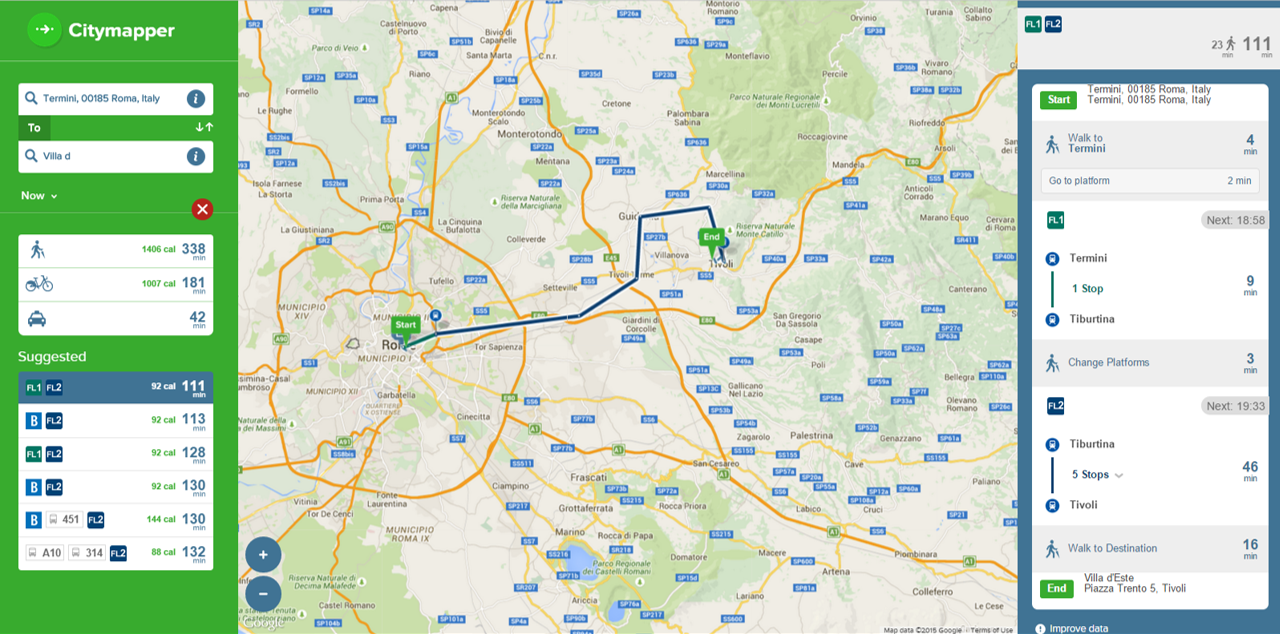
However, if you detest speaking to the uncivilized locals, who may not even know english, or if asking for directions is just beneath you or you simply consider technology to be the answer to all problems, you may find the following resources useful :-
  • Websites
    • Google Maps - Most transport companies share data with them. So a search for directions on google maps will include public transport options, including buses, trains, trams and their combinations. The results are shown with the exact timings of the bus, helping you decide when you should leave your hotel, or how much time you have to wander around before moving to the bus stand. However, this information is not available offline. This is one major reason why having a smartphone with an active data connection is very useful.

    • Here Maps - Formerly Nokia Maps. The information it provides is very similar to Google Maps. Though, it has the advantage that you can download maps by country / city for offline use, you still need a data connection for public transportation options. 

    • Hopstop - This site is another option for online local transit directions.
    • Many city transport authorities also have their own website/ apps. Check them out for the cities you are visiting, using google search. Since the english versions of these websites are generally not easy to understand, you may need the help of Google Translate. Some of these websites are - ATAC (Rome), ATAF (Florence), ACTV (Venice), Wiener Linien (Vienna) and RATP (Paris).
  • Apps
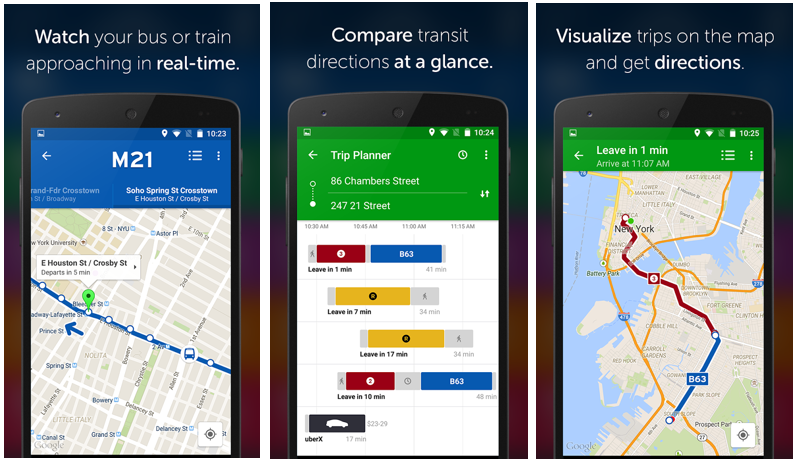
    • CityMapper (Android and iOS) - Presently available for 28 cities around the world - and growing. It has maps, public transportation schedules, timings, etc - and all available offline. So you can download the data for the city you are visiting and you are good to go. Data connection is required if you want info on real-time delays, etc. They also have a web version.

    • Transit (Android and iOS) - Similar to Citymapper. It has a much larger worldwide coverage.

    • Moovit (Android and iOS) - Covers over 600 cities. Unlike Citymapper and Transit, this app uses crowdsourced data, like Waze, to give you information on public transportation.

Conclusion

Planning your local movements, and also having the tools to plan it on the move, can save you a great deal of time, money and headache. One missed bus, leading to an hour waiting in the most uninteresting corner of town, is the surest way to ruin the rest of the day. You need not plan every move across town. But be sure to check the time and frequency of buses when going to the outskirts or a nearby town. You can also check the most comfortable means of traveling when the journey time is likely to be long.

However, speed and comfort need not be the only factors while deciding how you get around town. In Paris, for instance, the metro is an extremely efficient and fast means of transport. However, if you spend all your travel time underground, you will be missing out on a large part of this beautiful city. So be sure to use the bus, or even a bicycle when possible, to watch the city as it goes by.

In the end, walking is the best way to get around most European cities. You may use the public transport to reach the city centre, but thereafter plan to walk from one place to another. 

You need to slow down to truly enjoy the experience.

**********************************************************************************
Other posts in this series......

Eurotrip 2015 - Our Grand Tour

Eurotrip 2015 Episode 1- Genesis
 
Plan a European Holiday in 5 Easy Steps

How to Fly to Europe on a Budget

Hassle-free Bookings to Stay Within Budget

Planes, Trains and Automobiles - How to Travel Across Europe on the Cheap

Low Cost Airlines in Europe : A Budget Travelers Guide

Places to Visit - A Guide to Creating your Own Local Itinerary

Visa - The Key to the Beckoning Gates
Golden Tickets, Magic Passes and Hidden Entrances